2024 Annual Report for: Gelechiidae / Anomologinae
For species seen in 2024 that had less than or equal to 100 records, full details are included; for more common species, the earliest, latest and highest count by vice-county are shown. The narrative for each species is taken from the main Hantsmoths website, and it is possible that some information on abundance and occurrence can get out of date, as it is impossible to keep up with all changes; however it should give a good introduction to each species. The tables in each species account summarise the previous status, and that for the current year.
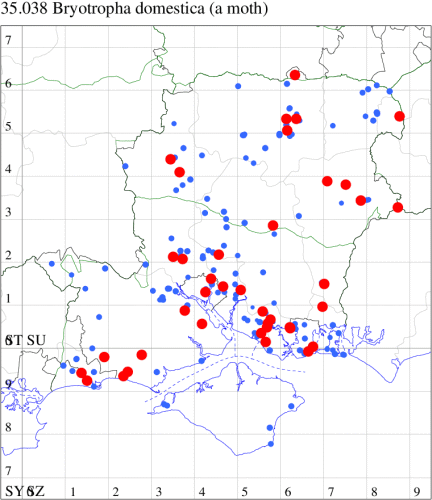
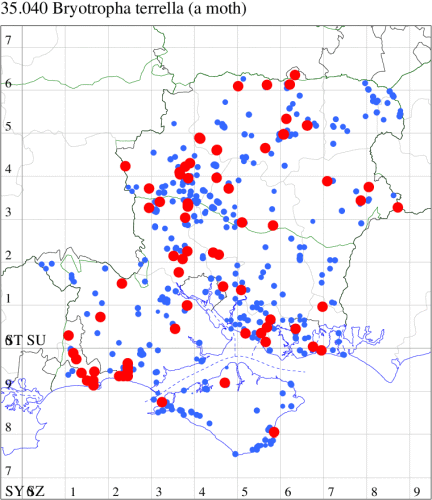
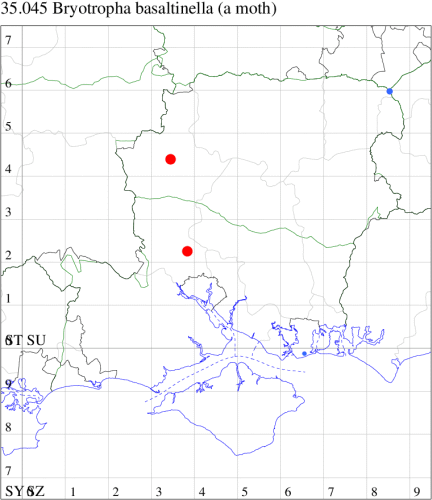
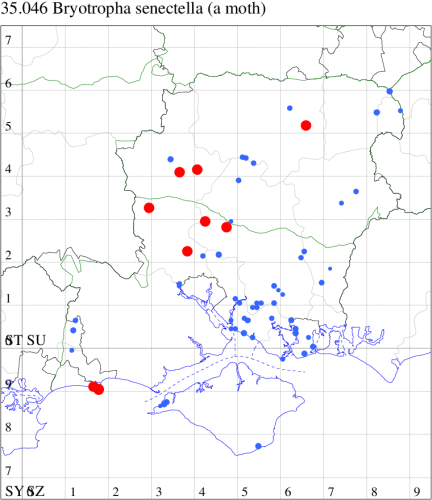
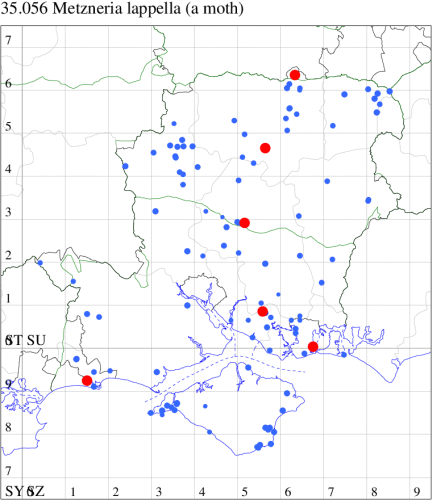
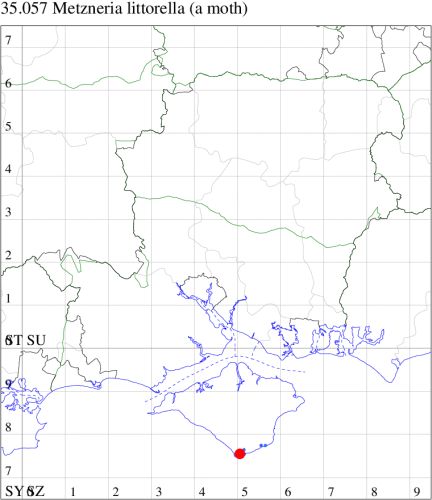
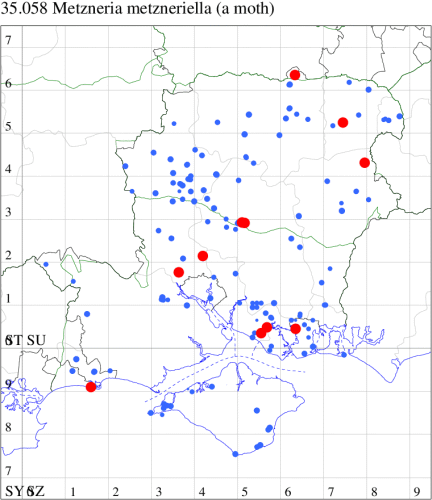
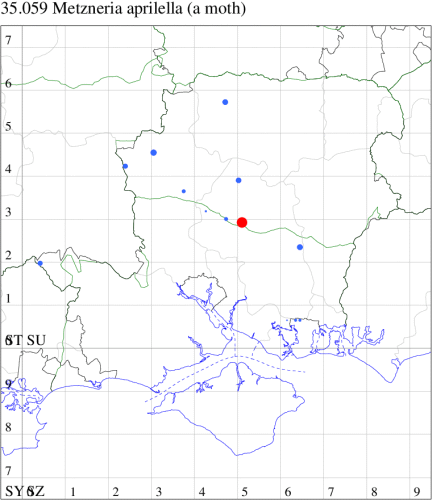
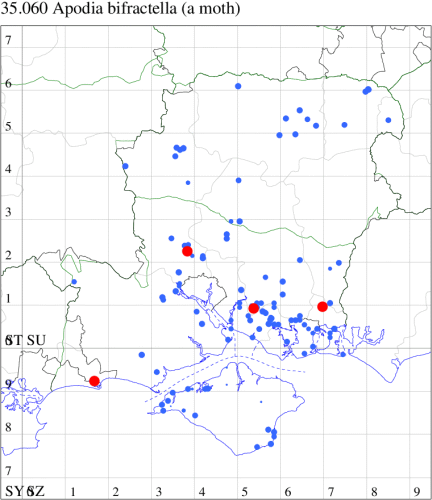
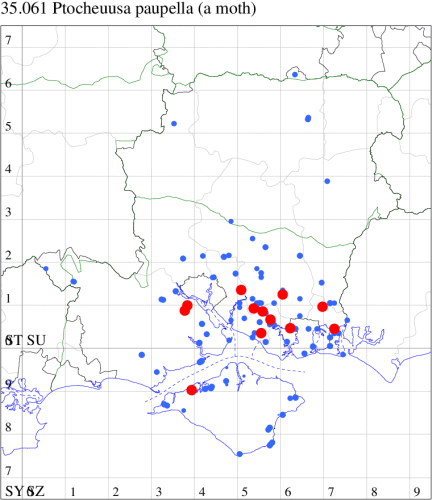
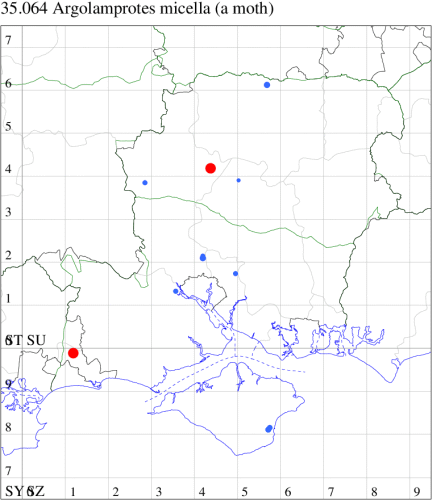
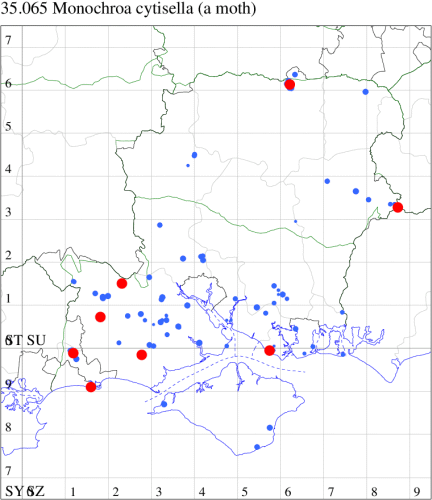
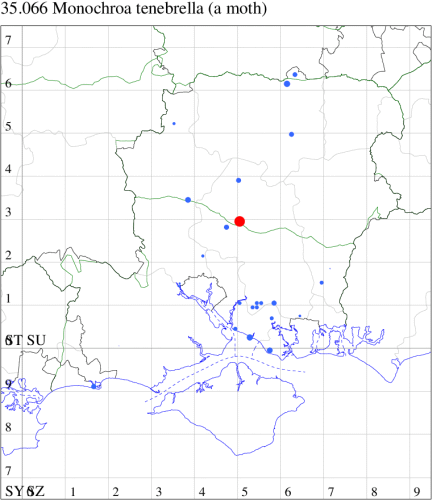
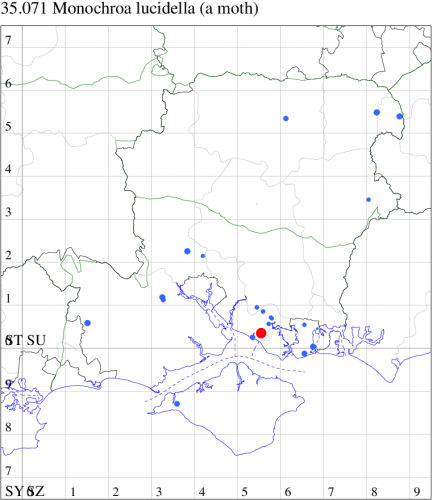
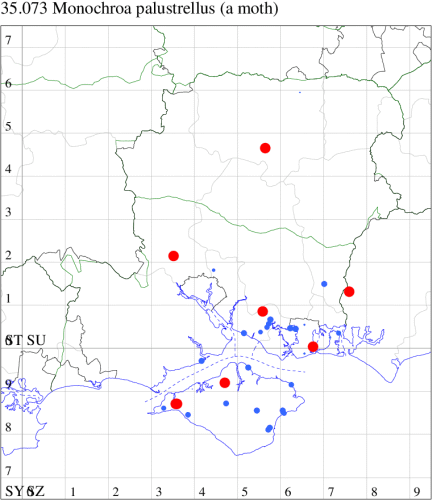
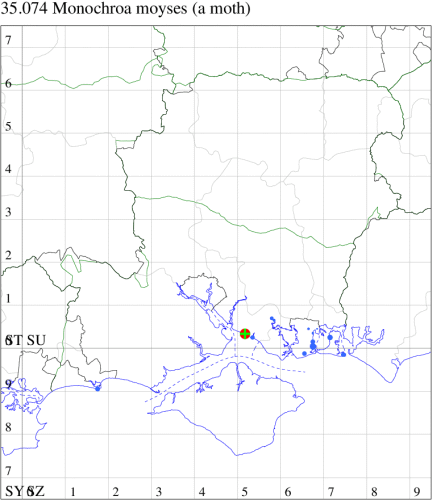
For the maps, all records prior to 2024 are shown by a blue dot (the larger the dot, the more recent), with the current year's records shown in red. As previous records are superimposed on any report for 2024, new sites have greater emphasis (i.e. will show as 'more red').
In the species accounts, an asterisk next to a location indicates a new 10km square record; earliest ever dates are highlighted in orange, and latest ever in red. Initials in the species accounts refer to the recorders listed here. Please get in touch if you identify any omissions or errors, in particular if you have records that have yet to be submitted. Details of how to submit records can be found here.
35.038 [B&F: 0789] Bryotropha domestica (Haworth, 1828) - Common
Common near buildings and around dry-stone walls throughout England, Wales and southern Ireland. Widespread and common in Hampshire. Recorded on the Isle of Wight for the first time since 1893 at Freshwater in 2009. Wingspan 11-14 mm. A light coloured species with slender forewing, contrasting markings and with the first discal above the second plical stigma, extremely pale forms of B. dryadella are distinguished from B. domestica by the much darker hindwing (MBGBI Vol 4 part 2). Larva feeds on various mosses, often on walls, living within a silken gallery.
Records prior to 2024
| Vice County | #Records | #Individuals | First Record | Last Record |
|---|---|---|---|---|
| 10 | 9 | 7 | 1893 | 2022 |
| 11 | 1870 | 2964 | 1961 | 2023 |
| 12 | 558 | 871 | 1996 | 2023 |
2024 records
| Vice County | #Records | #Individuals | Max Quantity |
|---|---|---|---|
| 11 | 81 | 113 | 7 |
| 12 | 33 | 39 | 4 |
Records by year
Records by week (adult)
Records by week (larval)
Record Summary
VC11: Earliest: Stubbington, 03 Jun, 1 (DPH) Latest: Waterlooville, 15 Sep, 1 (DWhe) Max count: Stubbington, 30 Jul, 7 (DPH)
VC12: Earliest: Alton, 10 Jun, 1 (DBO) Latest: Alton, 02 Sep, 1 (DBO) Max count: Basingstoke, 11 Aug, 4 (MJW)
35.040 [B&F: 0787] Bryotropha terrella (Denis & Schiffermüller, 1775) - Common
Common in grassland and mossy areas throughout the British Isles. Widespread and common in Hampshire and on the Isle of Wight. Wingspan 13-17 mm. A plain brown micro and therefore decidedly overlooked and under-recorded, the main confusion species are B. desertella and B. politella, but these are both extremely rare in Hampshire. Larva feeds on various grasses and mosses, living within a silken tube or tent.
Records prior to 2024
| Vice County | #Records | #Individuals | First Record | Last Record |
|---|---|---|---|---|
| 10 | 270 | 391 | 1856 | 2023 |
| 11 | 2071 | 3269 | 1971 | 2023 |
| 12 | 826 | 1475 | 1980 | 2023 |
2024 records
| Vice County | #Records | #Individuals | Max Quantity |
|---|---|---|---|
| 10 | 4 | 6 | 3 |
| 11 | 82 | 110 | 6 |
| 12 | 43 | 76 | 6 |
Records by year
Records by week (adult)
Records by week (larval)
Record Summary
VC10: Earliest: Parkhurst, 19 Jul, 1 (TJN, IMer, DCoo, LFom) Latest: Totland, 14 Aug, 3 (AiSmi) Max count: Totland, 14 Aug, 3 (AiSmi)
VC11: Earliest: New Milton, 20 May, 1 (SKee) Latest: New Milton, 27 Aug, 2 (SKee) Max count: New Milton, 24 Jul, 6 (SKee)
VC12: Earliest: Inhams Copse, Pamber, 28 May, 1 (GJD) Latest: Broxhead Common, 20 Aug, 1 (AMD,RCla) Max count: Inhams Copse, Pamber, 31 Jul, 6 (GJD)
35.045 [B&F: 0777] Bryotropha basaltinella (Zeller, 1839) - Nationally Scarce A
Nationally scarce (Na) in urban areas and on old buildings in southern England. First recorded in South Hampshire in 2013, and found on the Hampshire/Surrey border in North Hampshire in 2023. While occasionally reported, records are often unsupported by sufficient evidence to allow acceptance; it is probably under-recorded as very similar to B. dryadella and often only separable by dissection of the genitalia, however shape of fascia is straight or slightly inwards-bent in B. dryadella, but slightly outwards-bent and rarely straight in B. basaltinella (MBGBI Vol 4 part 2). Larva feeds on various mosses, living within a silken tube or tent.
Records prior to 2024
| Vice County | #Records | #Individuals | First Record | Last Record |
|---|---|---|---|---|
| 11 | 10 | 11 | 2013 | 2022 |
| 12 | 3 | 5 | 2023 | 2023 |
2024 records
| Vice County | #Records | #Individuals | Max Quantity |
|---|---|---|---|
| 11 | 4 | 4 | 1 |
| 12 | 3 | 8 | 5 |
Records by year
Records by week (adult)
Records by week (larval)
Record Details
VC11: Romsey, one, gen det. , 06 Jun; one, gen det. , 21 Jun; one, 10 Jul; one, 23 Jul (NRJ);
VC12: Anna Valley, Andover, one, 01 Aug; five, 10 Aug; two, 11 Aug (TJN)
35.046 [B&F: 0782] Bryotropha senectella (Zeller, 1839) - Local
Local in urban areas, old buildings and rocky areas throughout the British Isles, except for the Highlands and Islands of Scotland. In Hampshire frequent only in the south-east, and very much less common elsewhere in the county and on the Isle of Wight. Wingspan 9-13 mm. The brown colour and the dark line running over the vertex of the head distinguish B. senectella from similar looking species, but very dark forms resemble B. similis; in case of doubt, they can be separated by the pale yellow labial palpus and frons of B. senectella (creamy white in B. similis). Larva feeds on various mosses, living within a silken tube or tent.
Records prior to 2024
| Vice County | #Records | #Individuals | First Record | Last Record |
|---|---|---|---|---|
| 10 | 5 | 4 | 1900 | 2023 |
| 11 | 109 | 124 | 1974 | 2023 |
| 12 | 15 | 14 | 1987 | 2023 |
2024 records
| Vice County | #Records | #Individuals | Max Quantity |
|---|---|---|---|
| 11 | 8 | 9 | 2 |
| 12 | 3 | 4 | 2 |
Records by year
Records by week (adult)
Records by week (larval)
Record Details
VC11: Broughton Down, one, gen. det, 01 Jul (AMD); Romsey, one, 22 Jul; one, 31 Jul (NRJ); West Wood, Farley Mount CP, two, netted, 1m gen. det., 16 Jul (AMD); Winchester, one, 09 Aug (THW); Hengistbury Head NNR, one, 18 Aug (HengistH det. MJef); Hengistbury Head, one, 26 Jun; one, 26 Jun (MJef);
VC12: Goodworth Clatford, one, 03 Aug (WLid, TJN, LFom det. TJN); Wherwell, one, 07 Jul (GCE); Basingstoke: Crabtree Plantation, two, 24 Jul (SRae det. BGD)
35.047 [B&F: 0779] Bryotropha affinis (Haworth, 1828) - Common
Common around old buildings and in urban areas throughout southern Britain, very local elsewhere. In Hampshire widely distributed, but not particularly common. Recorded on the Isle of Wight for the first time at Freshwater in 2010. Wingspan 9-12 mm. Main confusion species is B. similis, but B. affinis usually has small pale yellow patch adjacent to streak in centre of forewing. Larva feeds on various mosses, especially those growing on old walls, living within a silken gallery.
Records prior to 2024
| Vice County | #Records | #Individuals | First Record | Last Record |
|---|---|---|---|---|
| 10 | 100 | 155 | 2010 | 2022 |
| 11 | 1935 | 3235 | 1973 | 2023 |
| 12 | 853 | 2009 | 1993 | 2023 |
2024 records
| Vice County | #Records | #Individuals | Max Quantity |
|---|---|---|---|
| 10 | 6 | 9 | 3 |
| 11 | 99 | 142 | 7 |
| 12 | 31 | 64 | 7 |
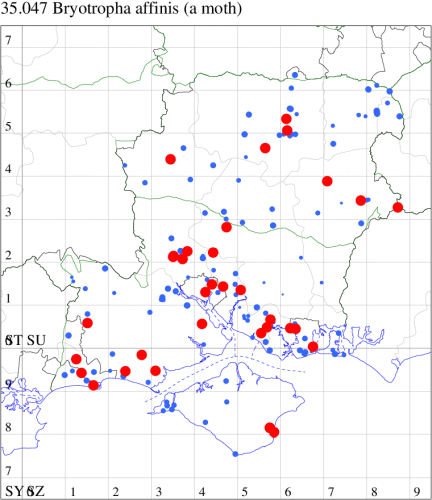
Records by year
Records by week (adult)
Records by week (larval)
Record Summary
VC10: Earliest: Shanklin, 09 Jun, 1 (IOu) Latest: Shanklin, 01 Sep, 2 (IOu) Max count: Shanklin, 31 Jul, 3 (IOu)
VC11: Earliest: Stubbington, 07 May, 1 (DPH) Latest: Christchurch: Cross Way, 15 Sep, 1 (LPyk) Max count: Stubbington, 30 Jul, 7 (DPH)
VC12: Earliest: Basingstoke, 20 May, 1 (MJW) Latest: Alton, 13 Aug, 1 (DBO) Max count: Basingstoke, 02 Jun, 7 (MJW)
35.050 [B&F: 0752] Aristotelia ericinella (Zeller, 1839) - Local
Local on heathland throughout England and Wales. In Hampshire fairly common on the heaths of the New Forest and the north-east, but very local elsewhere. Not recorded from the Isle of Wight since 1975. Wingspan 12-13 mm. Flies in afternoon, and occasionally comes to light. One of the more distinctive gelechiids, unlikely to be confused with any other species. Larva feeds on Heather, living between shoots spun together with silk, and over-wintering as an egg.
Records prior to 2024
| Vice County | #Records | #Individuals | First Record | Last Record |
|---|---|---|---|---|
| 10 | 11 | 16 | 1938 | 2020 |
| 11 | 178 | 868 | 1973 | 2023 |
| 12 | 43 | 55 | 1976 | 2023 |
2024 records
| Vice County | #Records | #Individuals | Max Quantity |
|---|---|---|---|
| 11 | 13 | 24 | 10 |
| 12 | 1 | 1 | 1 |
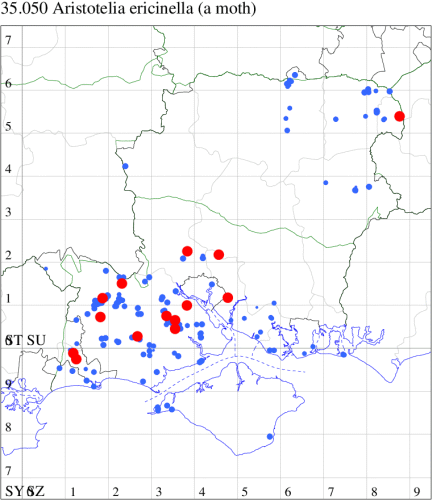
Records by year
Records by week (adult)
Records by week (larval)
Record Details
VC11: Linford Bottom, four, 05 Aug (CLew); Ogden's Purlieu, NF, one, 11 Jul (AMD); Crab Tree Bog, NF, one, swept, 10 Aug (STho); Howen Bottom, NF, one, 22 Jul (AMD); Matley Bog, NF, 10, field obs., 14 Aug (JHC); Pig Bush, NF, one, 24 Jul (NRJ); Beaulieu Road, NF, one, at dusk, 18 Jul (AMD); Marchwood, one, 05 Aug (CTha); Romsey, one, 10 Aug (NRJ); Netley Common, one, field obs., 26 Jul (PAB); Allbrook, one, 10 Aug (SIng); Merritown Heath, present, 17 Aug (DFoo); Hurn, one, 11 Aug (MJef);
VC12: Farnborough, one, 30 Jul (KBW)
35.053 [B&F: 0729] Isophrictis striatella (Denis & Schiffermüller, 1775) - Nationally Scarce B
Nationally scarce (Nb) on waste ground, roadside verges, gardens, damp grassland and fens in Britain, from Devon to Norfolk, with isolated populations in north Wales, northern England and Aberdeenshire. In Hampshire the majority of records come from around Southsea, Portsmouth and Fareham, with only one single record from north Hampshire; the species is perhaps overlooked away from the south-east corner of vice-county 11. Reported new for the Isle of Wight in 2022. Wingspan 11-13 mm. Outwardly oblique white streak from costa at four-fifths to middle of termen, extending into cilia; two or three white specks on costa between streak and apex; distinct circular discal spot (MBGBI Vol 4 part 2). Larva feeds within seedheads of Tansy and Sneezewort, over-wintering in a silken chamber.
Records prior to 2024
| Vice County | #Records | #Individuals | First Record | Last Record |
|---|---|---|---|---|
| 10 | 1 | 1 | 2022 | 2022 |
| 11 | 86 | 104 | 1974 | 2023 |
| 12 | 1 | 1 | 1999 | 1999 |
2024 records
| Vice County | #Records | #Individuals | Max Quantity |
|---|---|---|---|
| 11 | 3 | 3 | 1 |
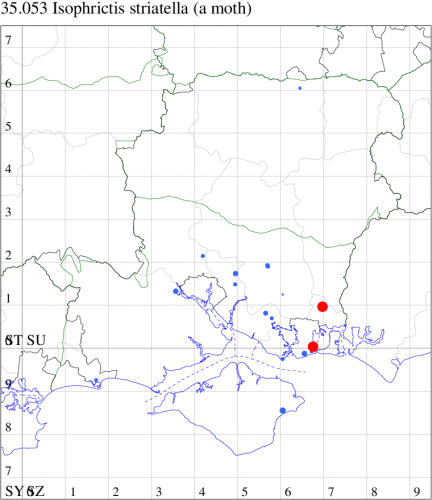
Records by year
Records by week (adult)
Records by week (larval)
Record Details
VC11: Portsmouth, one, 19 Jul; one, 29 Jul (IRT); Waterlooville, one, 26 Jul (DWhe)
35.055 [B&F: 0725] Metzneria aestivella (Zeller, 1839) - Nationally Scarce B
Nationally scarce (Nb) in open calcareous grassland throughout much of southern and eastern England and northern Wales; rare in Scotland and Ireland. In Hampshire and on the Isle of Wight most frequently recorded at Portsdown and on the southern coast of the Island; old records from 1996 at Broughton Down and at Magdalen Hill Down, the only records to date from the north of the county. Wingspan 13-16 mm. Larva feeds within seedheads of Carline Thistle, over-wintering in a silken chamber.
Records prior to 2024
| Vice County | #Records | #Individuals | First Record | Last Record |
|---|---|---|---|---|
| 10 | 24 | 15 | 1900 | 2022 |
| 11 | 14 | 5 | 1980 | 2015 |
| 12 | 1 | 1 | 1996 | 1996 |
2024 records
| Vice County | #Records | #Individuals | Max Quantity |
|---|---|---|---|
| 10 | 1 | 1 | 1 |
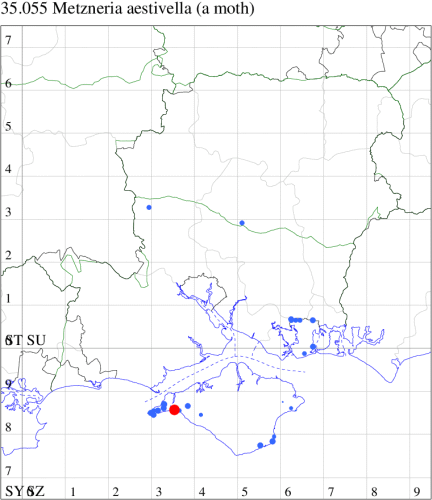
Records by year
Records by week (adult)
Records by week (larval)
Record Details
VC10: Freshwater Bay, one, gen Det., 25 Jun (PBard)
35.056 [B&F: 0724] Metzneria lappella (Linnaeus, 1758) - Local
Local in waste ground, gardens, open woodland and downland throughout England and north Wales; rare in Scotland. Widespread and common in Hampshire, except for the New Forest, and in the western half of the Isle of Wight. Wingspan 16-20 mm. The main confusion species is M. metzneriella, which differs in the much darker general appearance, especially in apical and terminal areas. Larva feeds within the seedheads of Greater and Lesser Burdock, over-wintering in a cocoon.
Records prior to 2024
| Vice County | #Records | #Individuals | First Record | Last Record |
|---|---|---|---|---|
| 10 | 34 | 38 | 1900 | 2022 |
| 11 | 195 | 249 | 1980 | 2023 |
| 12 | 130 | 250 | 1997 | 2023 |
2024 records
| Vice County | #Records | #Individuals | Max Quantity |
|---|---|---|---|
| 11 | 3 | 3 | 1 |
| 12 | 2 | 2 | 1 |
Records by year
Records by week (adult)
Records by week (larval)
Record Details
VC11: Funtley, one, 22 Jun (TDC); Portsmouth, one, 30 Jul (IRT); Christchurch, one, 12 Jul (APard);
VC12: Morn Hill, Winchester, one, 29 Jun (CRB,DAS,PDF); North Waltham, one, 19 Jul (AJon);
35.057 [B&F: 0723] Metzneria littorella (Douglas, 1850) - pRDB1
Rare and confined to open ground on the south coast of the Isle of Wight, where it has persisted for over 150 years. Not recorded from Hampshire to date. Wingspan 9-14 mm. Larva feeds on seeds of Buckshorn Plantain, over-wintering in a cocoon.
Records prior to 2024
| Vice County | #Records | #Individuals | First Record | Last Record |
|---|---|---|---|---|
| 10 | 28 | 131 | 1850 | 2013 |
2024 records
| Vice County | #Records | #Individuals | Max Quantity |
|---|---|---|---|
| 10 | 1 | 2 | 2 |
Records by year
Records by week (adult)
Records by week (larval)
Record Details
VC10: Reeth Bay, Niton, two, field obs., 19 Jun (AMD)
35.058 [B&F: 0726] Metzneria metzneriella (Stainton, 1851) - Common
Common on grassland, downland, waste ground and roadside verges throughout the British Isles, north to Inverness-shire. In Hampshire and on the Isle of Wight fairly widespread and common. Wingspan 14-19 mm. The main confusion species is M. lappella, which differs in the much lighter general appearance, especially in the apical and terminal areas. Larva feeds within seedheads of Common Knapweed and Saw-wort, over-wintering in a cocoon.
Records prior to 2024
| Vice County | #Records | #Individuals | First Record | Last Record |
|---|---|---|---|---|
| 10 | 44 | 53 | 1900 | 2022 |
| 11 | 200 | 223 | 1974 | 2023 |
| 12 | 142 | 217 | 1971 | 2023 |
2024 records
| Vice County | #Records | #Individuals | Max Quantity |
|---|---|---|---|
| 11 | 6 | 6 | 1 |
| 12 | 4 | 4 | 1 |
Records by year
Records by week (adult)
Records by week (larval)
Record Details
VC11: Lee, one, 13 Jul (CTha); Chandlers Ford, one, 25 Jun (BEll); Stubbington, one, 23 Jul (DPH); Fareham, one, 29 Jun (ADT); Horsea Island, one, det gen, 24 May (F.M.G. det. RJD); Hengistbury Head, one, 26 Jun (RPH det. MJef);
VC12: Magdalen Hill Down NR, one, 19 Jul (AMD); Morn Hill, Winchester, one, 29 Jun (CRB,DAS,PDF); Bentley Station Meadow, one, 23 Jul (NDP, KBW); Odiham Common, one, netted, gen. det, 02 Jun (AMD);
35.059 [B&F: 0727a] Metzneria aprilella (Herrich-Schäffer, 1854) - Nationally Scarce B
Nationally scarce (Nb) on grassland, mainly calcareous, and waste ground throughout south-eastern England. In Hampshire the species' stronghold is on Portsdown Hill, with a small population around Leckford. Not recorded from the Isle of Wight to date. Wingspan 15-18 mm. Has been confused with M. neuropterella in the past, but is generally smaller, with forewing suffused orange-vermilion, a colour not found in that species, and lacks the pale area containing a stigma at the distal end of the cell (MBGBI Vol 4 part 2). Larva feeds within seedheads of Greater Knapweed, over-wintering in a silken chamber.
Records prior to 2024
| Vice County | #Records | #Individuals | First Record | Last Record |
|---|---|---|---|---|
| 11 | 11 | 8 | 1981 | 2014 |
| 12 | 8 | 21 | 1980 | 2016 |
2024 records
| Vice County | #Records | #Individuals | Max Quantity |
|---|---|---|---|
| 12 | 1 | 2 | 2 |
Records by year
Records by week (adult)
Records by week (larval)
Record Details
VC12: Magdalen Hill Down NR, two, 23 Jun (AMD)
35.060 [B&F: 0730] Apodia martinii Petry, 1911 - Local
Local in damp meadows, open downland and saltmarshes throughout much of England and Wales. In Hampshire mainly confined to the south-east, very rare elsewhere in the county and on the Isle of Wight. Wingspan 9-12 mm. Flies in late afternoon. Characterised by a ferruginous-orange streak at tornus and outwardly oblique streak beyond on costa, often connected by scales of similar colour forming a Z-shaped fascia (MBGBI Vol 4 part 2), but these markings are sometimes obscure, in which case identification is possible only by dissection of the genitalia. Larva feeds within seedheads of Common Fleabane, Ploughman's-spikenard and Sea Aster.
Records prior to 2024
| Vice County | #Records | #Individuals | First Record | Last Record |
|---|---|---|---|---|
| 10 | 30 | 66 | 1893 | 2020 |
| 11 | 137 | 375 | 1973 | 2023 |
| 12 | 44 | 104 | 1984 | 2022 |
2024 records
| Vice County | #Records | #Individuals | Max Quantity |
|---|---|---|---|
| 11 | 4 | 6 | 3 |
Records by year
Records by week (adult)
Records by week (larval)
Record Details
VC11: Romsey, one, 30 Jul (NRJ); Botley Wood, one, 05 Aug (AMD); Waterlooville, one, 28 Jul (DWhe det. SJP); Stanpit Marsh LNR, three, 13 Aug (MJef)
35.061 [B&F: 0748] Ptocheuusa paupella (Zeller, 1847) - Local
Local in damp grassland, ditches, woodland rides and saltmarshes throughout much of southern England, southern Wales and southern Ireland. In Hampshire still reasonably common in the south-east of the county, but it has become scarce in recent years in north Hampshire and on the Isle of Wight. Wingspan 10-12 mm. Comes readily to light, and is fairly distinctive. Larva feeds within seedheads of Common Fleabane and Golden-samphire, over-wintering as a pupa.
Records prior to 2024
| Vice County | #Records | #Individuals | First Record | Last Record |
|---|---|---|---|---|
| 10 | 42 | 53 | 1847 | 2023 |
| 11 | 357 | 469 | 1973 | 2023 |
| 12 | 8 | 15 | 1989 | 2013 |
2024 records
| Vice County | #Records | #Individuals | Max Quantity |
|---|---|---|---|
| 10 | 1 | 1 | 1 |
| 11 | 21 | 29 | 3 |
Records by year
Records by week (adult)
Records by week (larval)
Record Details
VC10: Speedwell, Cranmore, NF, one, gen. det, 18 Jun (AMD);
VC11: Marchwood, three, 16 Aug (TDCh); one, 11 Aug (CTha); Botley Wood, one, 05 Aug (AMD); Stubbington, one, 30 Jul (DPH); Funtley, one, 03 Jun; one, 07 Jun; one, 29 Jun; two, 01 Aug; one, 06 Aug; three, 12 Aug; one, 26 Aug (TDC); Fareham, one, det gen, 23 Aug (MLO det. RJD); Botley, one, 25 Jun (SLB); Portchester, one, 27 Aug (DH-J); Waterlooville, one, 11 Aug; two, 13 Aug; one, 26 Aug; three, 27 Aug; one, 24 Sep (DWhe); West Walk, one, 23 Aug (F.M.G.); Northney, one, field obs., 17 Aug (AMD)
35.064 [B&F: 0734] Argolamprotes micella (Denis & Schiffermüller, 1775) - Nationally Scarce B
Nationally scarce, in hedgerows, open woodland and gardens, in Devon and Cornwall, and also Dorset, Somerset, Hampshire and Glamorgan; unknown in the British Isles until 1963 when one was taken at light at Ide, near Exeter, Devon (MBGBI Vol 4 part 2). In Hampshire, recorded for the first time at Winchester on 14 July 1987; subsequently the 21st century has produced a scattering of records across the county. The first record for the Isle of Wight was in 2019. Wingspan 10-14mm. Larva feeds within buds and young shoots of Bramble and Raspberry.
Records prior to 2024
| Vice County | #Records | #Individuals | First Record | Last Record |
|---|---|---|---|---|
| 10 | 2 | 2 | 2019 | 2021 |
| 11 | 6 | 6 | 1987 | 2023 |
| 12 | 3 | 3 | 2010 | 2023 |
2024 records
| Vice County | #Records | #Individuals | Max Quantity |
|---|---|---|---|
| 11 | 1 | 1 | 1 |
| 12 | 1 | 1 | 1 |
Records by year
Records by week (adult)
Records by week (larval)
Record Details
VC11: Merritown Heath, one, 29 Jun (DFoo);
VC12: Barton Stacey, one, 29 Jun (GCE)
35.065 [B&F: 0728] Monochroa cytisella (Curtis, 1837) - Local
Local in woodland and on heathland and hillsides throughout much of England, Wales and southern Ireland. In Hampshire widely distributed in the south of the county, notably in the New Forest and in and around Wickham Common; more thinly distributed in the north, where known from Harewood, Pamber and Woolmer Forests; one from the Isle of Wight in 2013 was the first for 80 years. Wingspan 10-12 mm. Larva feeds within stems of Bracken.
Records prior to 2024
| Vice County | #Records | #Individuals | First Record | Last Record |
|---|---|---|---|---|
| 10 | 7 | 6 | 1845 | 2021 |
| 11 | 83 | 119 | 1974 | 2023 |
| 12 | 30 | 53 | 1976 | 2023 |
2024 records
| Vice County | #Records | #Individuals | Max Quantity |
|---|---|---|---|
| 11 | 6 | 9 | 4 |
| 12 | 2 | 2 | 1 |
Records by year
Records by week (adult)
Records by week (larval)
Record Details
VC11: Linford Bottom, four, 05 Aug (CLew); Howen Bottom, NF, one, 22 Jul (AMD); Merritown Heath, present, 17 Aug (DFoo); Hengistbury Head, one, 26 Jun (RPH det. MJef); Sway, two, 01 Aug (SKee); Browndown, one, female det gen, 09 Aug (F.M.G. det. RJD);
VC12: Inhams Copse, Pamber, one, 29 Jul (GJD); Hammer Vale, Woolmer, one, 30 Jul (ASwa)
35.066 [B&F: 0735] Monochroa tenebrella (Hübner, [1817]) - Local
Local in scrubland, unimproved grassland and heathland throughout much of the British Isles. In south Hampshire, widely distributed from Holmsley Inclosure in the west to Oxenbourne Down in the east, with a significant population in Botley Wood; in north Hampshire, recorded once, at Wildhern in July 1998; on the Isle of Wight, recorded on a few occasions on the south-west coast, but not since 1978. Wingspan 10-12 mm. Larva feeds within roots and lower stems of Sheep's Sorrel.
Records prior to 2024
| Vice County | #Records | #Individuals | First Record | Last Record |
|---|---|---|---|---|
| 10 | 3 | 3 | 1973 | 1978 |
| 11 | 55 | 113 | 1974 | 2017 |
| 12 | 7 | 6 | 1998 | 2020 |
2024 records
| Vice County | #Records | #Individuals | Max Quantity |
|---|---|---|---|
| 12 | 1 | 1 | 1 |
Records by year
Records by week (adult)
Records by week (larval)
Record Details
VC12: Magdalen Hill Down NR, one, netted, gen. det, 17 Jun (AMD)
35.071 [B&F: 0736] Monochroa lucidella (Stephens, 1834) - Local
Local in marshes, water meadows, fens and by river-banks throughout much of England, Wales and southern Ireland. In Hampshire the main population is centred in the south-east of the county in and around Fareham, Southsea, Botley Wood and along the west side of Langstone Harbour; in the north of the county, recorded recently only from the Deadwater Valley, formerly known from Alice Holt and Itchen Abbas. Not recorded from the Isle of Wight to date. Wingspan 12-14 mm. Larva feeds within stems of Common Spike-rush.
Records prior to 2024
| Vice County | #Records | #Individuals | First Record | Last Record |
|---|---|---|---|---|
| 10 | 1 | 1 | 2018 | 2018 |
| 11 | 42 | 55 | 1985 | 2023 |
| 12 | 10 | 14 | 1962 | 2023 |
2024 records
| Vice County | #Records | #Individuals | Max Quantity |
|---|---|---|---|
| 11 | 1 | 1 | 1 |
Records by year
Records by week (adult)
Records by week (larval)
Record Details
VC11: Stubbington, one, 19 Jul (DPH)
35.073 [B&F: 0737] Monochroa palustrellus (Douglas, 1850) - Nationally Scarce B
Nationally scarce (Nb) in waste ground, dry pastures and sand-dunes, south-east of a line from Somerset to Norfolk (MBGBI Vol 4 part 2). In Hampshire the main population is found in the south of the county, notably at Southsea, Funtley and Lower Test Marshes, where first confirmed for Hampshire in 1992; there is one record from the north of the county, at Bramley Frith Wood in 1999, and a few from the Isle of Wight, after the first at Cranmore in 1997. Wingspan 15-19 mm. Larva feeds within roots and lower stems of Curled Dock and Dock, over-wintering as an egg or small larva.
Records prior to 2024
| Vice County | #Records | #Individuals | First Record | Last Record |
|---|---|---|---|---|
| 10 | 16 | 23 | 1997 | 2022 |
| 11 | 74 | 75 | 1992 | 2023 |
| 12 | 1 | 1 | 1999 | 1999 |
2024 records
| Vice County | #Records | #Individuals | Max Quantity |
|---|---|---|---|
| 10 | 7 | 11 | 4 |
| 11 | 4 | 4 | 1 |
| 12 | 2 | 2 | 1 |
Records by year
Records by week (adult)
Records by week (larval)
Record Details
VC10: Freshwater, four, 27 Jun; one, 04 Jul; one, 22 Jun; two, 26 Jun; one, 29 Jun; one, 02 Jul (PBard); Parkhurst, one, 19 Jul (TJN, IMer, DCoo, LFom);
VC11: Romsey, one, 02 Aug (TJN); Funtley, one, 25 Jun (TDC); Portsmouth, one, 14 Jul (IRT); South Holt Farm, NF, one, 12 Jul (CGree det. OHen);
VC12: North Waltham, one, 29 Jun; one, 01 Jul (AJon)
35.074 [B&F: 0744a] Monochroa moyses Uffen, 1991 - Nationally Scarce A
Nationally scarce (Na) in brackish marshes, saltmarshes and ditches on the coast of south-eastern England, from Hampshire to Suffolk. In Hampshire apparently restricted to the coastal strip east of Southampton, from Fareham to Hayling Island. Not recorded from the Isle of Wight to date. Wingspan 8-9 mm. Main confusion species is M. hornigi, which has the forewing brownish fuscous and obscure paler annulations on the tibia of the hindleg (MBGBI Vol 4 part 2). Larva mines leaves of Sea Club-rush.
Records prior to 2024
| Vice County | #Records | #Individuals | First Record | Last Record |
|---|---|---|---|---|
| 11 | 36 | 19 | 1984 | 2019 |
2024 records
| Vice County | #Records | #Individuals | Max Quantity |
|---|---|---|---|
| 11 | 1 | 8 | 8 |
Records by year
Records by week (adult)
Records by week (larval)
Record Details
VC11: Brownwich, mine, eight, on Sea Club-rush, 04 Sep (DPH)
35.081 [B&F: 0731] Oxypteryx atrella (Denis & Schiffermüller, 1775) - Local
Local on downland, rough ground, dry pastures and in woodland clearings throughout much of England and Wales; rare in Ireland. In Hampshire widespread and common; on the Isle of Wight, first recorded at Cranmore in July 2001. Wingspan 11-13 mm. The most likely confusion species is E. immaculatella, which differs in having a dark fuscous (ochreous in E. atrella) labial palpus, but often reliably separated only by dissection of the genitalia. Larva feeds within stems of Perforate St John's-wort and Hairy St John's-wort, over-wintering in a case made from leaf fragments.
Records prior to 2024
| Vice County | #Records | #Individuals | First Record | Last Record |
|---|---|---|---|---|
| 10 | 6 | 5 | 1977 | 2016 |
| 11 | 86 | 91 | 1977 | 2023 |
| 12 | 60 | 86 | 1971 | 2023 |
2024 records
| Vice County | #Records | #Individuals | Max Quantity |
|---|---|---|---|
| 11 | 3 | 3 | 1 |
| 12 | 4 | 4 | 1 |

Records by year
Records by week (adult)
Records by week (larval)
Record Details
VC11: Marchwood, one, 30 Jul (TDCh); Romsey, one, 26 Jul (NRJ); Botley Wood, one, gen. det, 05 Aug (AMD);
VC12: Lower Wyke Farm, St Mary Bourne, one, 23 Jul (GCE); Magdalen Hill Down NR, one, gen. det, 23 Jun (AMD); Morn Hill, Winchester, one, 28 Jul (CRB, DAS); Inhams Copse, Pamber, one, 24 Jul (GJD)